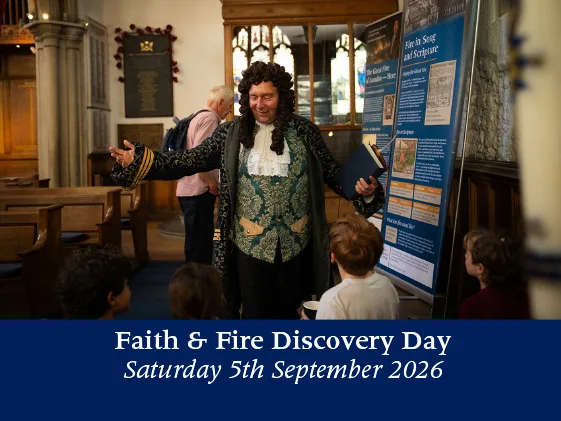
Faith & Fire Discovery Day
Exploring the Science and Faith of the Great Fire of London
Saturday 5th September 2026 12pm-5pm
at St Olave Hart Street, Seething Lane Gardens & All Hallows by the Tower
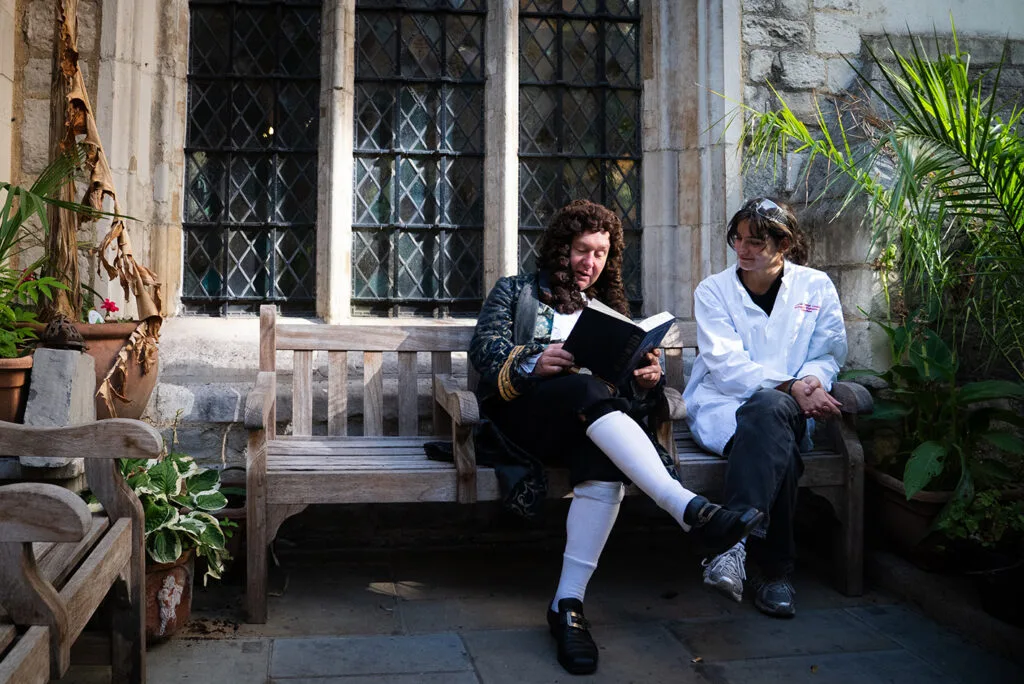
On Saturday 5 September, St Olave Hart Street marked the anniversary of the Great Fire of London with a very different kind of discovery day, bringing together scientists, historians, churches, families and visitors to explore what fire can teach us about our past — and about the challenges we face today.
Faith & Fire: Exploring the Science and Faith of the Great Fire of London took place across St Olave Hart Street, Seething Lane Gardens and All Hallows by the Tower. At its heart was a simple question: what can the Great Fire of London still teach us today?
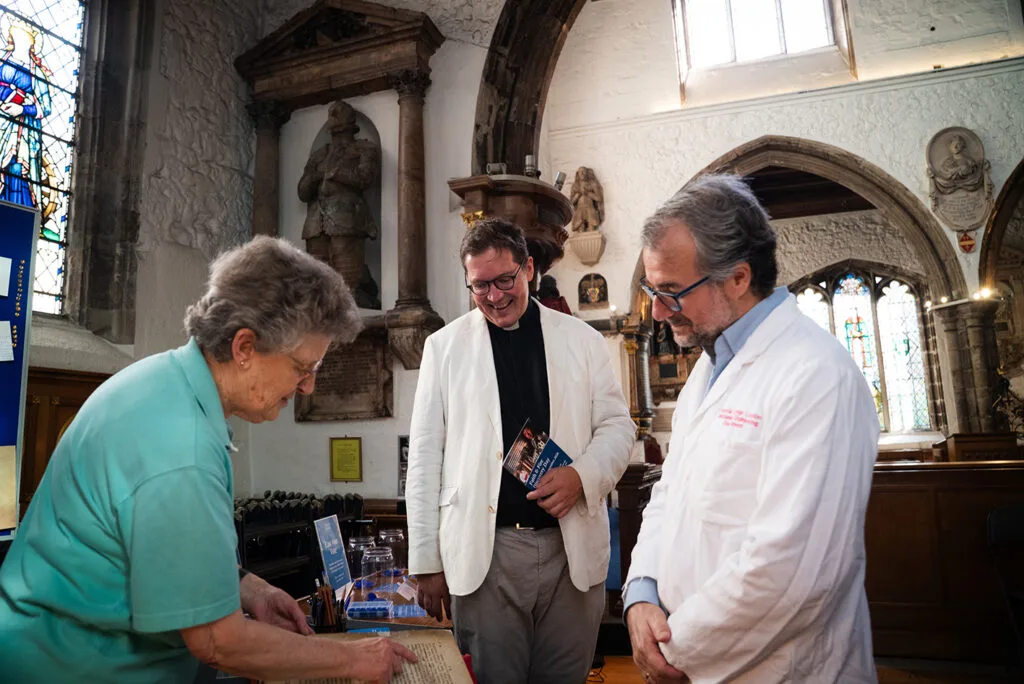
There could hardly be a more appropriate place to ask it. St Olave’s was one of the few City churches to survive the Great Fire in 1666 and was the “own church” of Samuel Pepys, whose extraordinary diary provides one of our most important eyewitness accounts of the disaster. Pepys lived immediately opposite the church in Seething Lane and is buried beneath the floor of St Olave’s.
Bringing Pepys’ observations to life
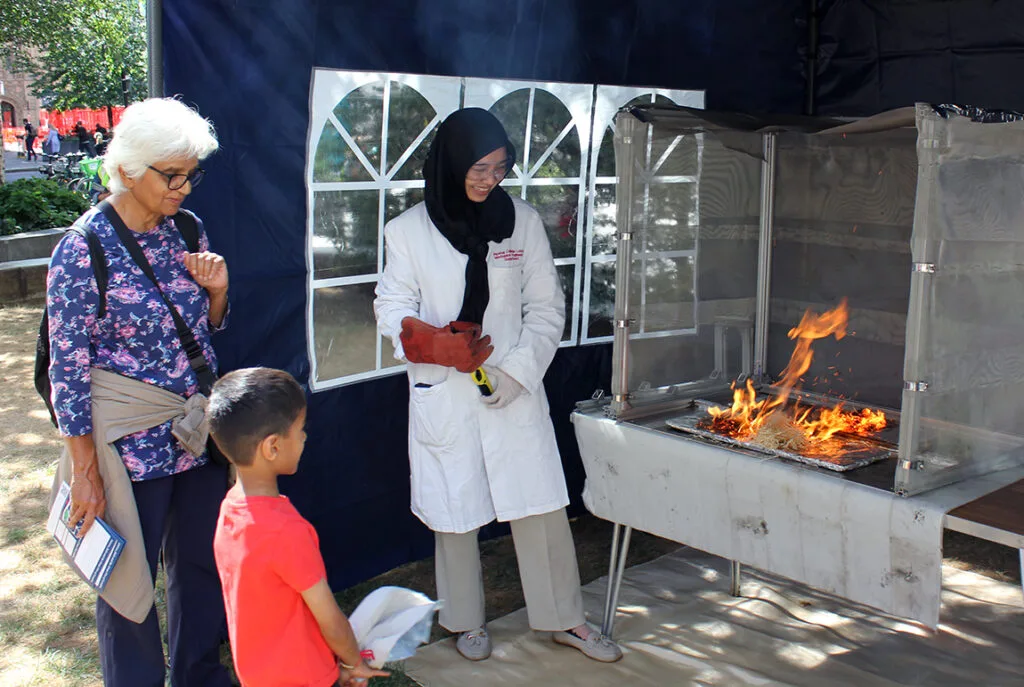
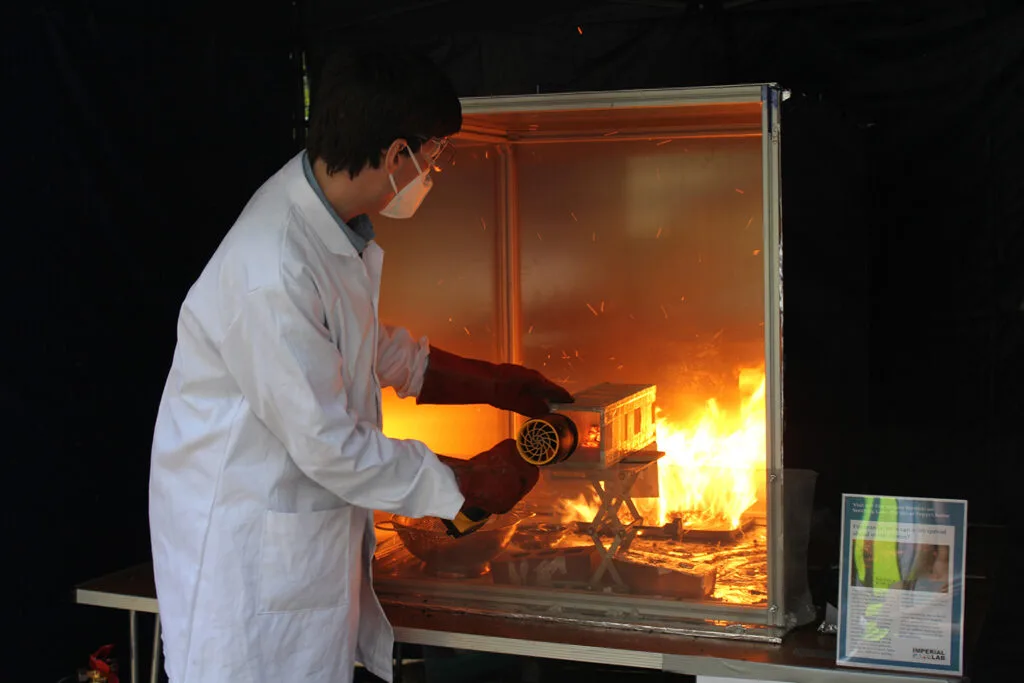
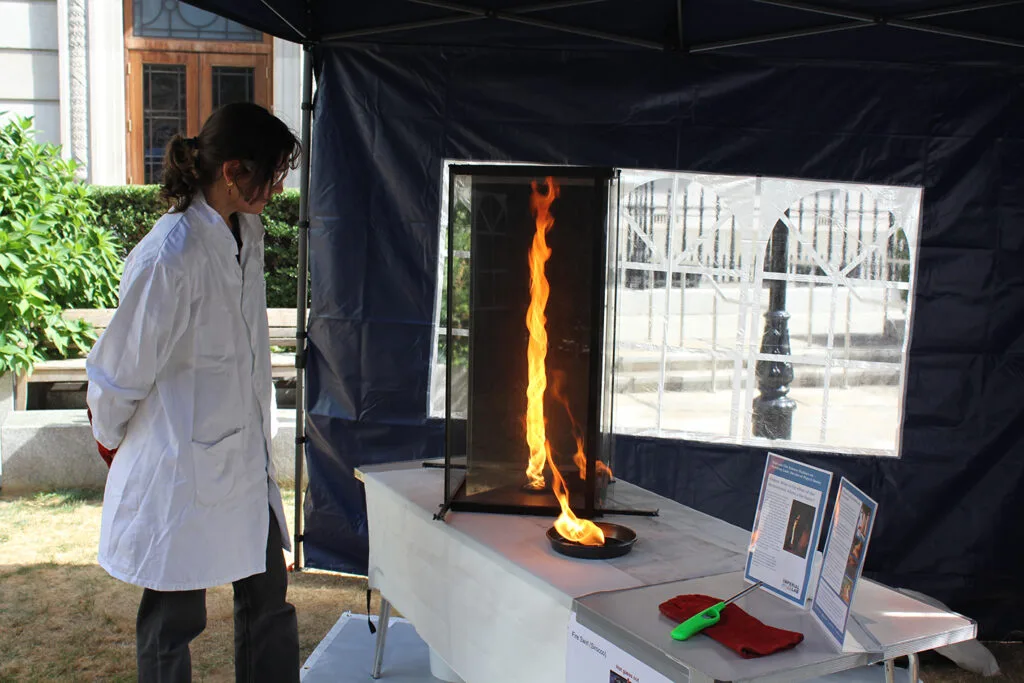
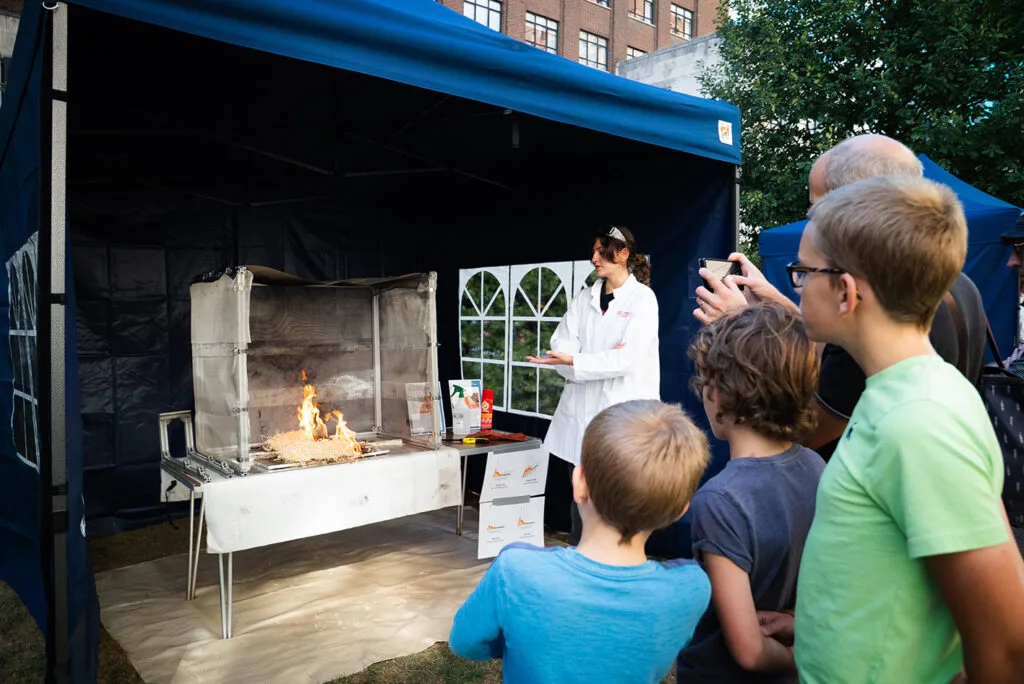
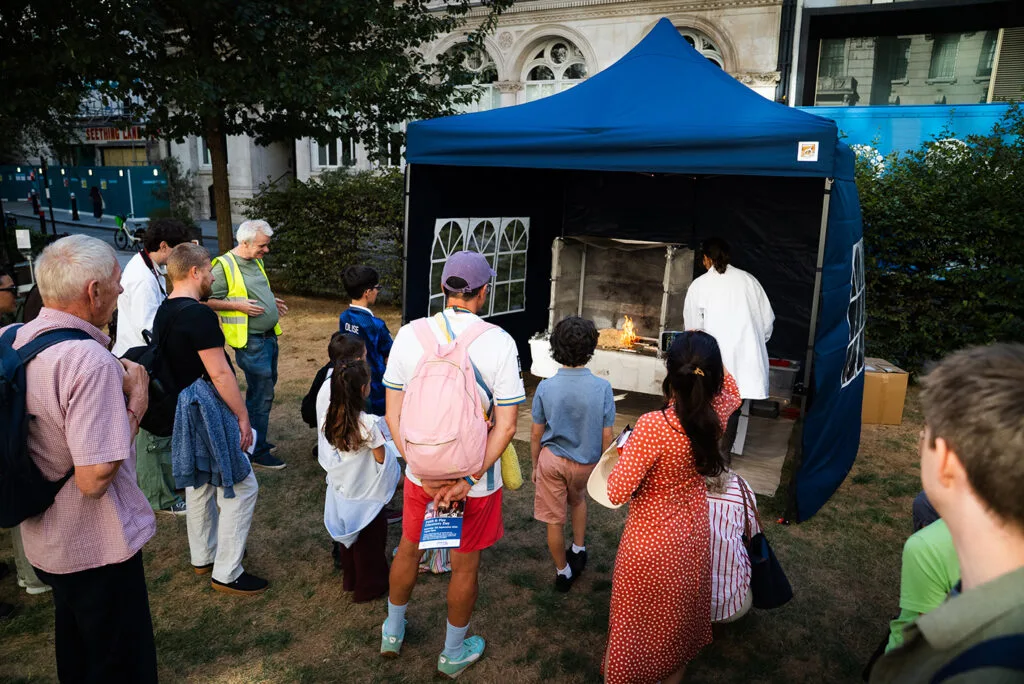
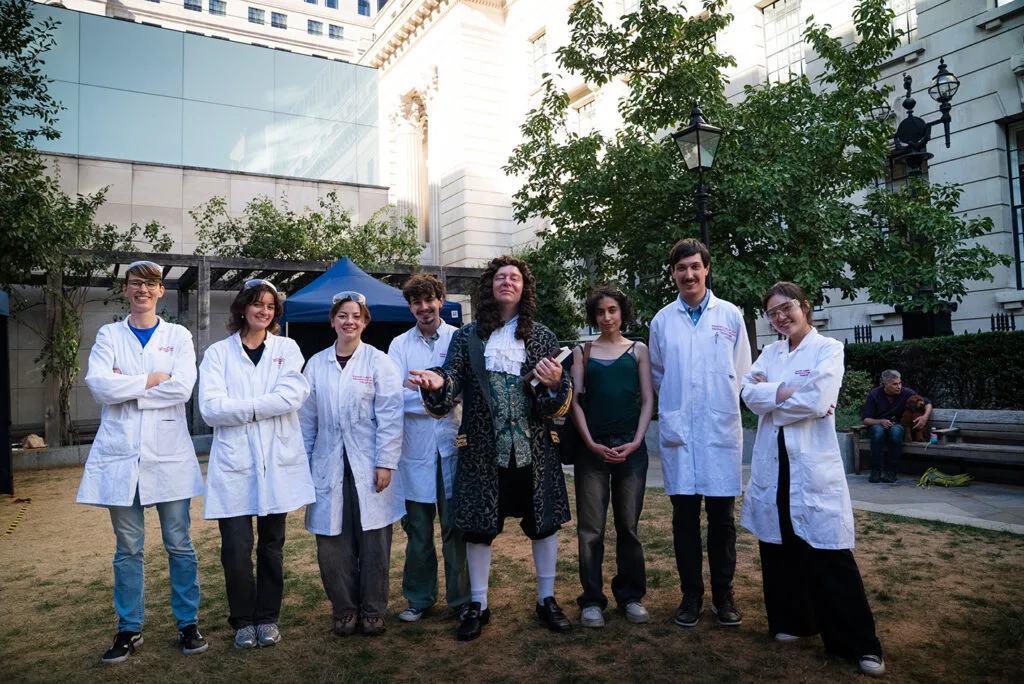
Four centuries after Pepys watched the fire spread through London, Professor Guillermo Rein and the Hazelab team from Imperial College London transformed Seething Lane Gardens into an outdoor fire laboratory.
Through a series of live demonstrations, visitors were able to see some of the processes that determine how fire starts, develops and behaves. Experiments explored the importance of fuel, airflow and the surrounding environment — demonstrating that fire is not simply a matter of something “catching alight”, but a complex physical phenomenon which scientists continue to study.
The demonstrations gave a new perspective to Pepys’ diary. His descriptions of flames, wind, burning buildings and flying “firedrops” are not only compelling historical testimony: they record phenomena which modern fire science can help us understand.
That connection matters beyond our interest in 1666. Fire scientists today are working to understand building fires and increasingly destructive wildfires, and to find ways of making people, buildings and communities safer.
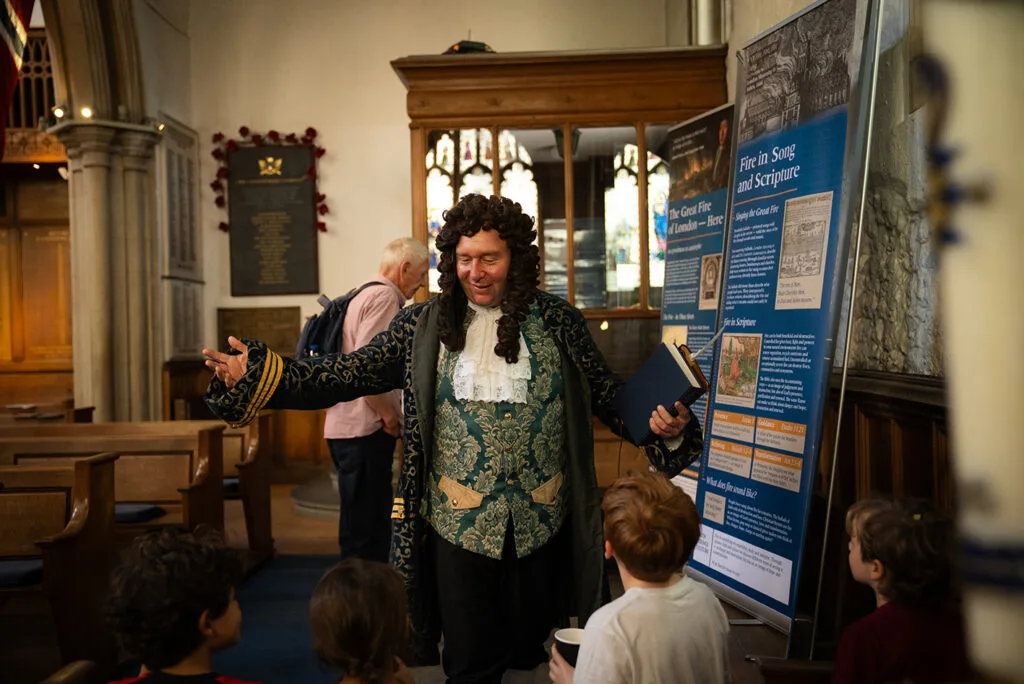
From eyewitness to diarist
Inside St Olave’s and All Hallows by the Tower, visitors could encounter the Great Fire in other ways.
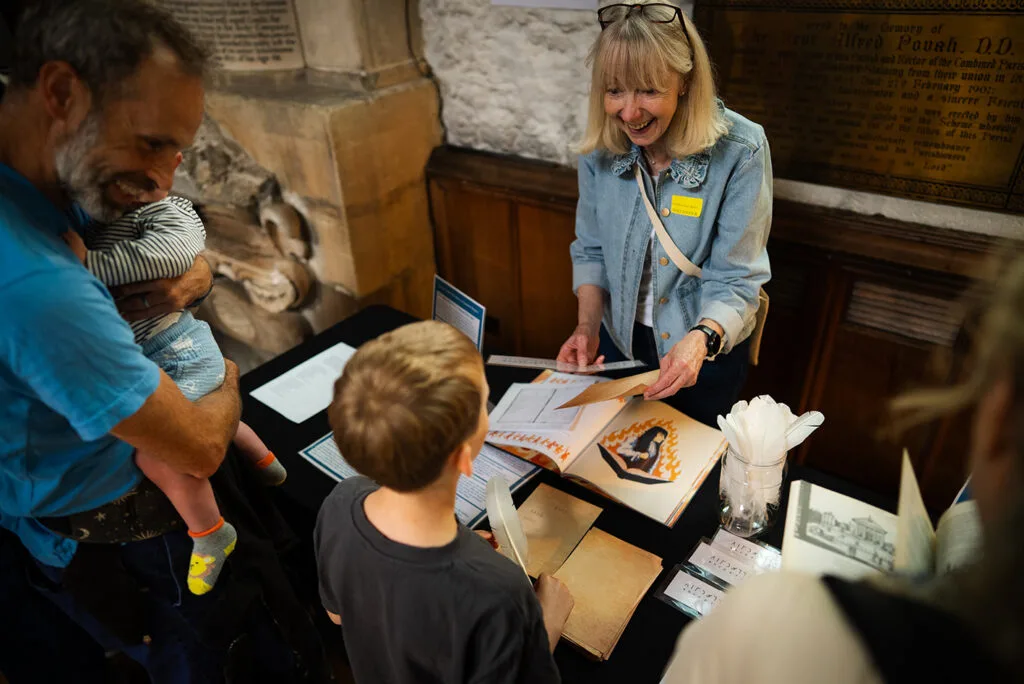
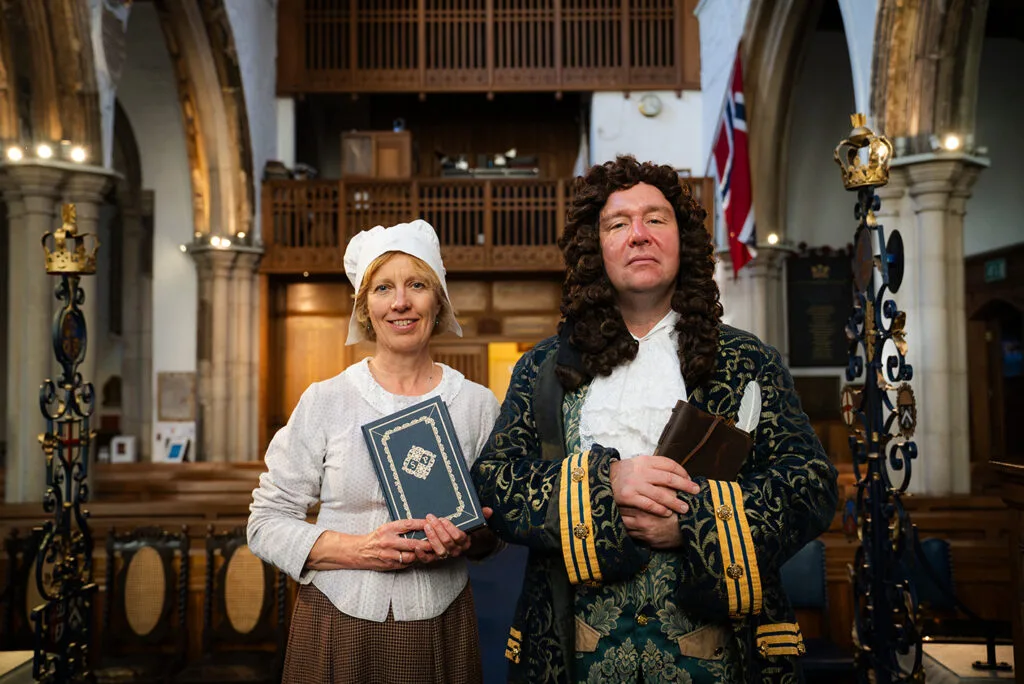
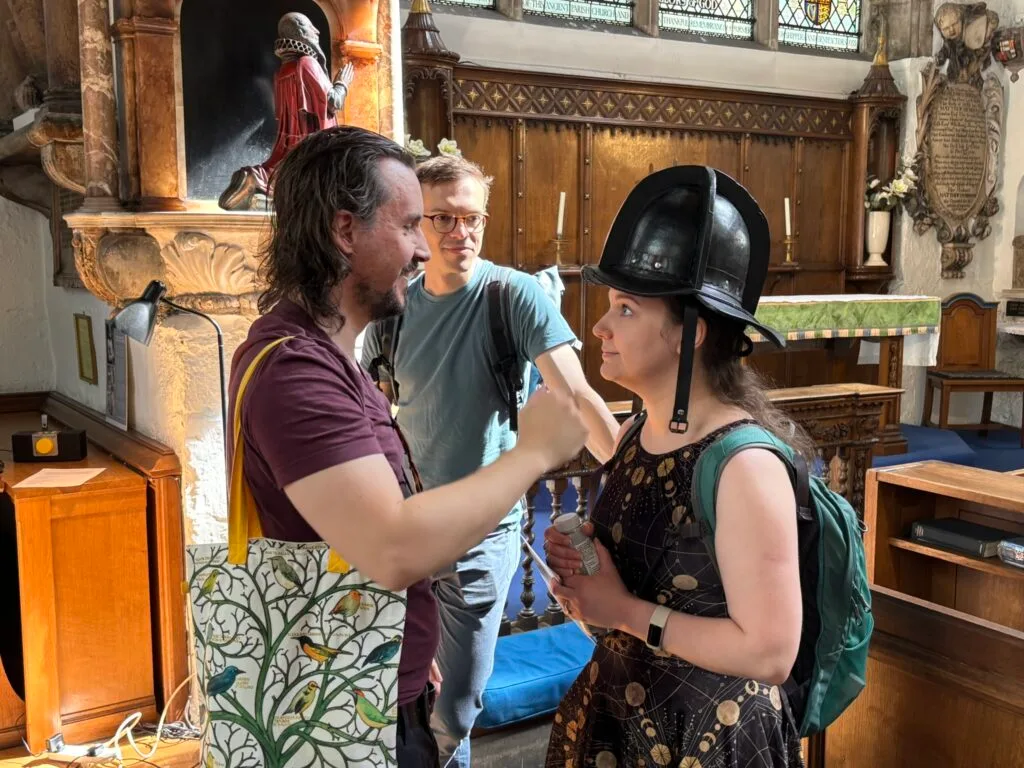
Families followed Pepys through the neighbourhood in which he lived and worked; searched for his memorials; dressed as Samuel and Elizabeth Pepys; and experimented with the shorthand system in which Pepys recorded his famous diary.
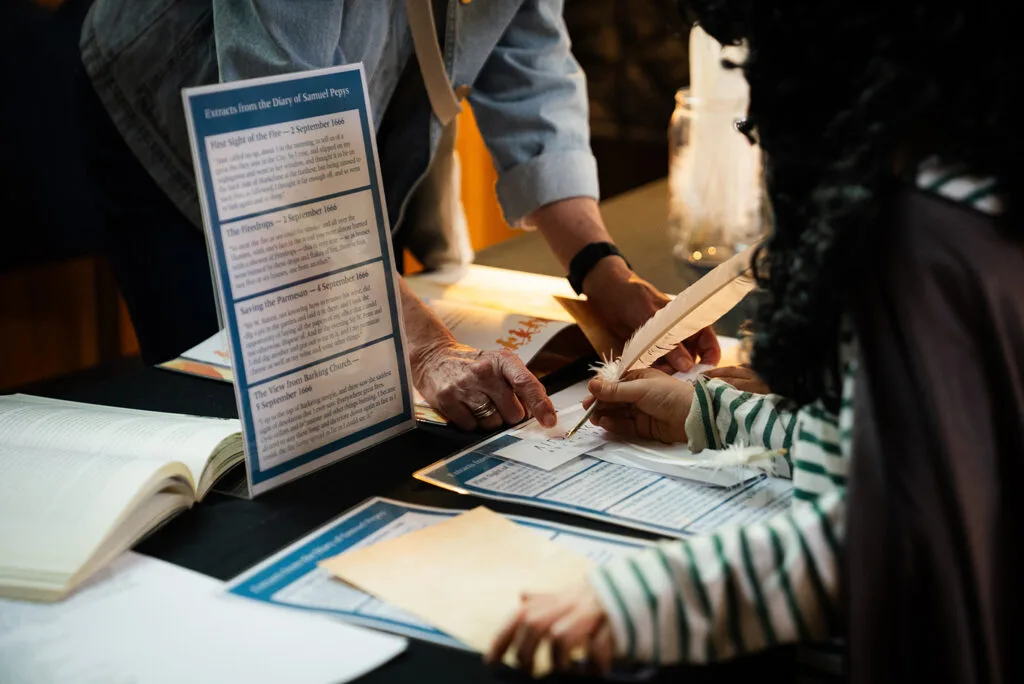
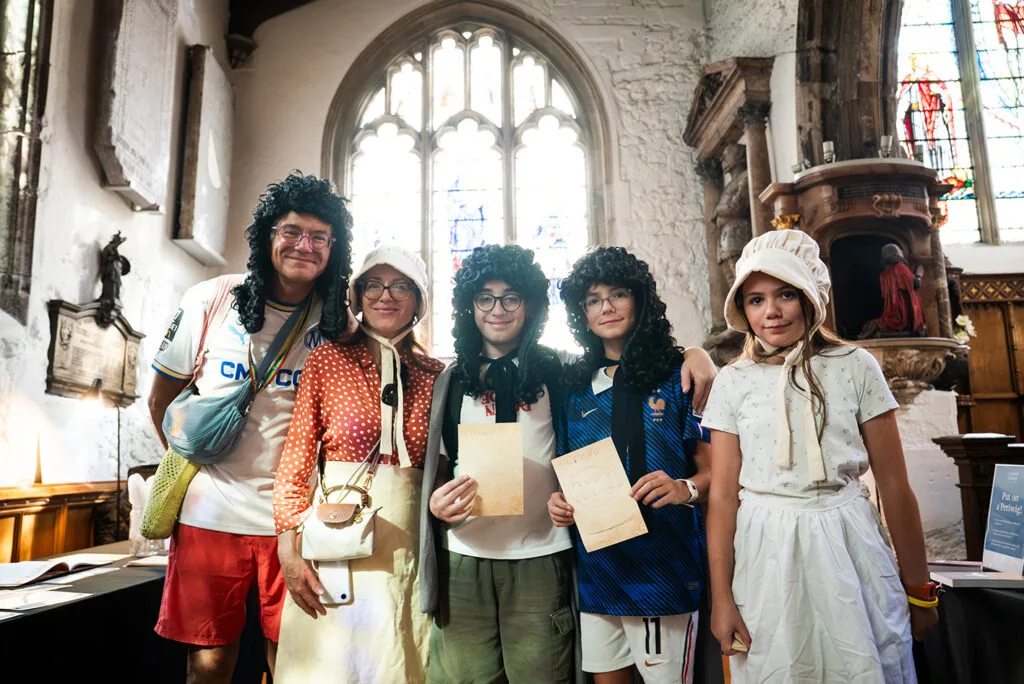
Extracts from the diary encouraged visitors to encounter the disaster through the experience of an individual human being: Pepys first seeing the flames, observing the fire from the church tower, watching burning material carried through the air, and famously taking steps to protect some of his most treasured possessions.
His diary also prompted a question for visitors of all ages: if disaster threatened your home, what would you save?
What does fire mean?
Yet Faith & Fire was deliberately about more than history and science.
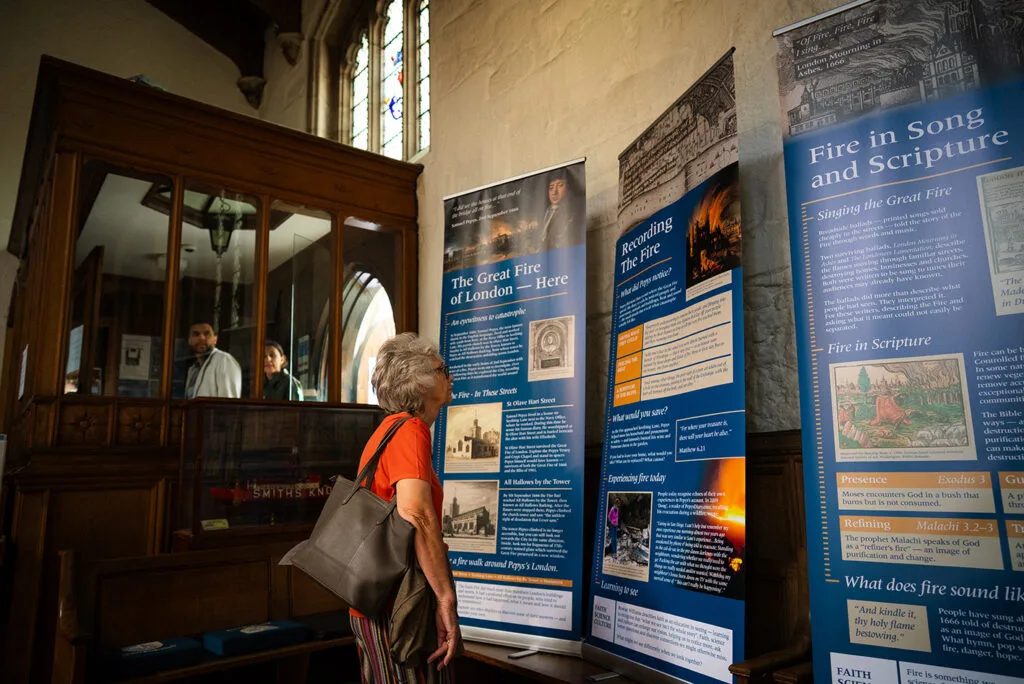
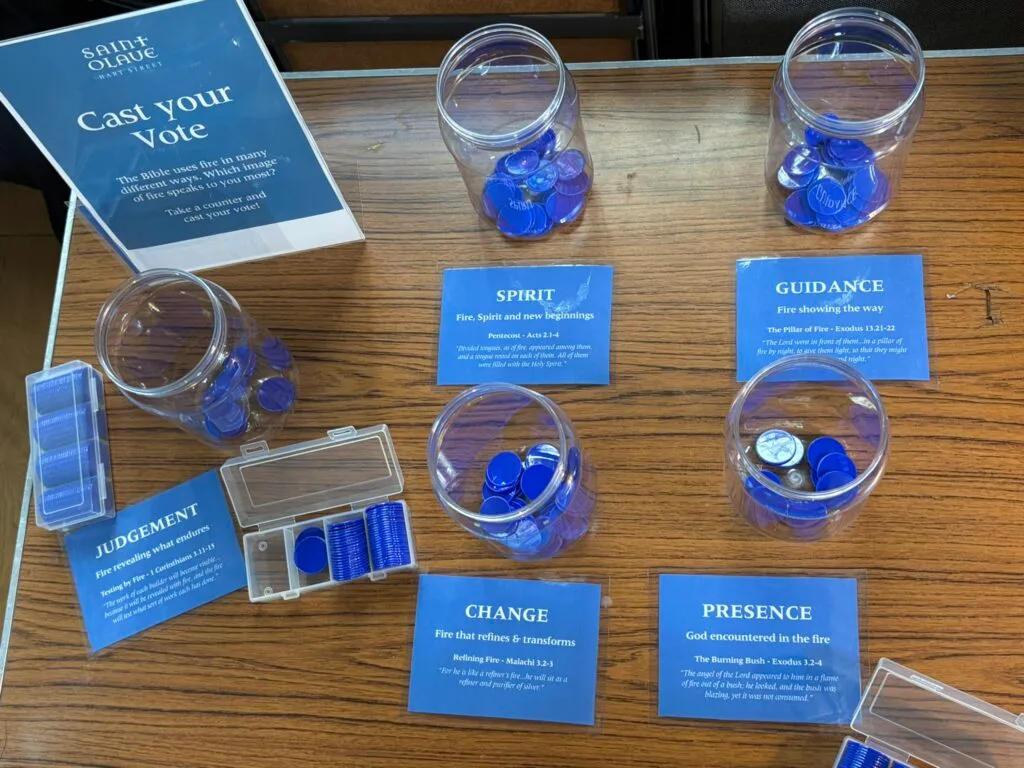
Displays and activities explored the extraordinary range of meanings attached to fire in the Bible and Christian tradition: fire can illuminate and warm, purify and transform; it can signify the presence of God and the coming of the Holy Spirit; but it can also destroy, consume and become an image of judgement.
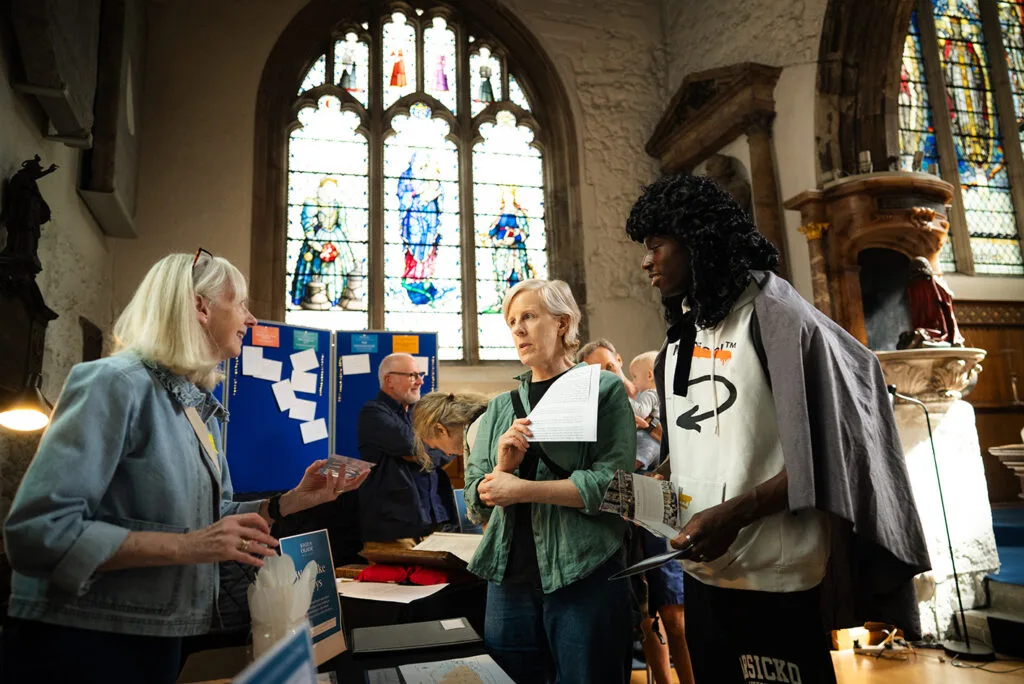
Visitors were invited not simply to read about those traditions but to respond themselves — voting for the biblical image of fire which spoke most powerfully to them, writing and drawing reflections, and offering prayers for communities affected by wildfires today.
The changing Christian interpretation of the Great Fire itself formed part of the story. Earlier generations could readily interpret catastrophe as divine judgement. Four centuries later, science gives us vastly greater knowledge of how fires begin and spread. Yet greater scientific understanding does not remove the deeper human questions which disaster raises.
Science can help us understand how fire behaves and how we can protect people from it. Faith asks us to consider what we do with that knowledge: how we value human life, respond to suffering, care for creation and one another, and rebuild when something precious has been lost.
From destruction to rebuilding
Those questions continued at our Great Fire Anniversary Service on Sunday 6th September.
The church in which we gathered has itself lived through destruction and restoration. It escaped the Great Fire but was devastated during the Blitz and subsequently rebuilt. Its stones therefore bear witness not simply to survival but to the patient work of restoration.
The Christian response to what is broken cannot be endlessly to stir the old coals of bitterness and resentment. We are called instead towards truth, reconciliation and the rebuilding of relationships and communities.
That makes the Great Fire more than an episode in London’s past. Across the world today, firefighters, scientists and communities face fires intensified by a changing climate. Understanding what happened before can help us prepare for what lies ahead. Remembering how communities have rebuilt can also remind us that destruction need not have the final word.
A continuing project
Faith & Fire was made possible through a grant from the Scientists in Congregations Programme, run by Equipping Christian Leaders in an Age of Science (ECLAS) and funded by the John Templeton Foundation.
We are enormously grateful to Professor Guillermo Rein and the Hazelab team at Imperial College London; All Hallows by the Tower; the City of London Corporation Gardens Team; our volunteers and everyone who contributed to the day.
The project will not end with the Discovery Day. Film and other resources created through Faith & Fire will help us develop future school visits and enable new generations studying the Great Fire to encounter its history in the place where Samuel Pepys experienced it. Please do get in touch if you know of a school who would like to visit us.
Thank you to everyone who came and explored Faith and Fire with us.
You can read more information about the activities at this link and read the text of some of the display boards in church here.
Photography by Luke LeBihan with close up shots of the experiments by the Hazelab Team at Imperial College London.
This event was made possible thanks to a grant from the Scientists in Congregations Programme run by Equipping Christian Leaders in an Age of Science (ECLAS) and funded by the John Templeton Foundation and with support of the City of London Corporation Gardens Team to whom we are very grateful.