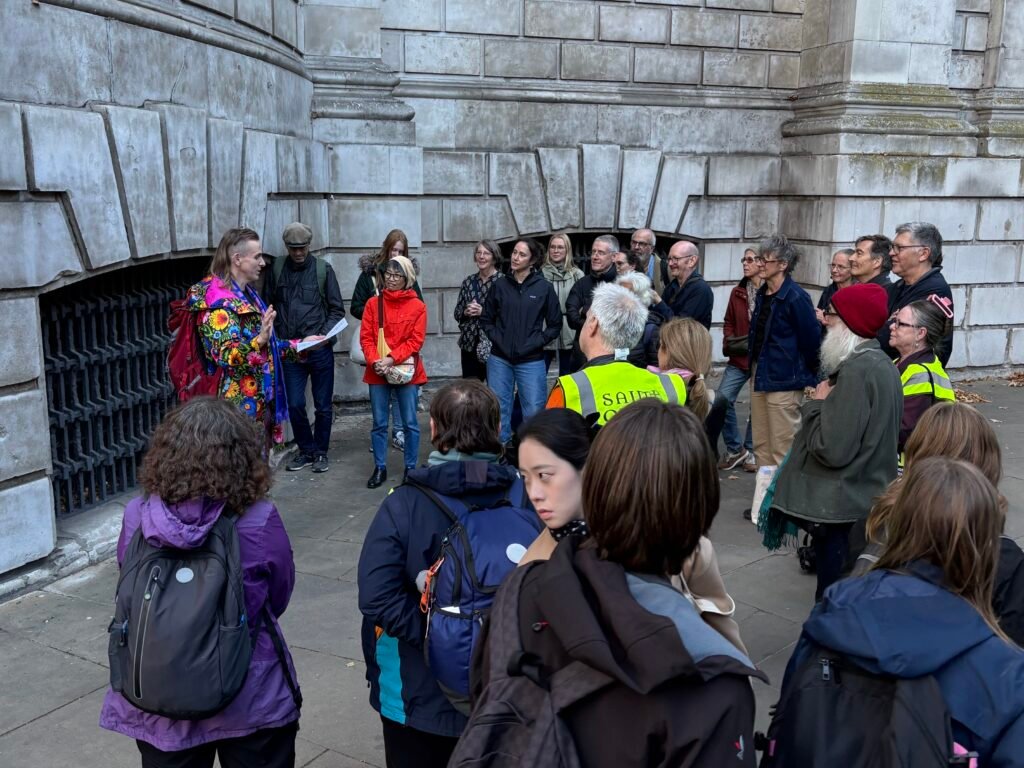
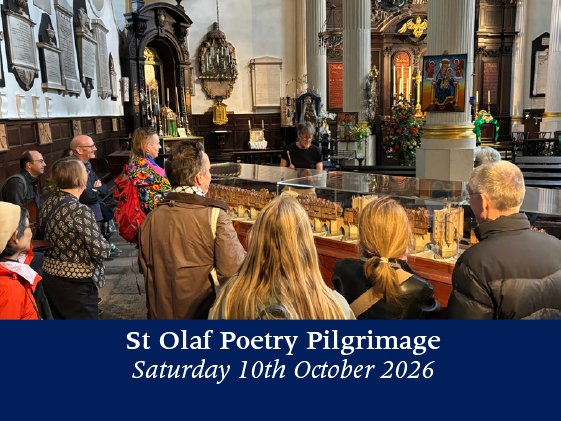
Thank you to everyone who joined us for our St Olaf Poetry Pilgrimage through the City of London, exploring some of the places connected with the remarkable story of Olaf Haraldsson, the eleventh-century Norwegian warrior king who became a saint.
Our journey took us through nearly a thousand years of London’s history, discovering how Olaf’s story remains woven into the fabric of the City, and how poetry can help us encounter these ancient places and stories afresh.
Along the way, we visited:
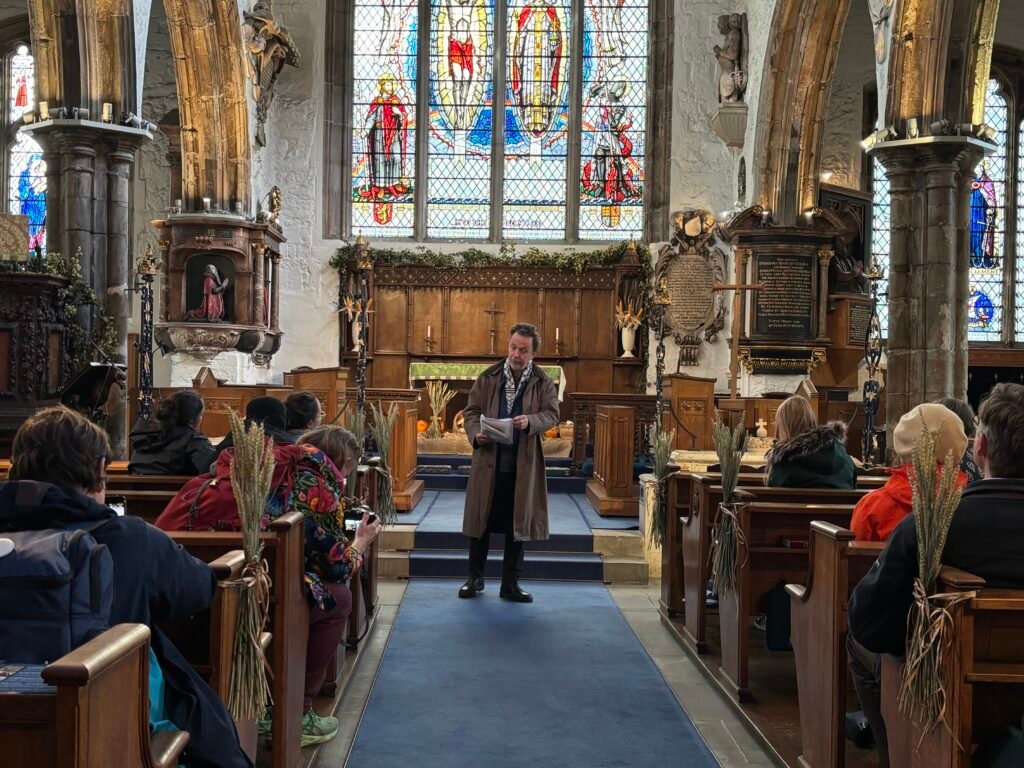
St Olave Hart Street
Our pilgrimage began at the church dedicated to Olaf, where we explored the extraordinary transformation of his reputation from Viking warrior to Christian saint. Medieval accounts of miraculous healing associated with Olaf include a remarkable story set at this very church, reminding us how stories of violence and healing, suffering and redemption, can exist alongside one another.
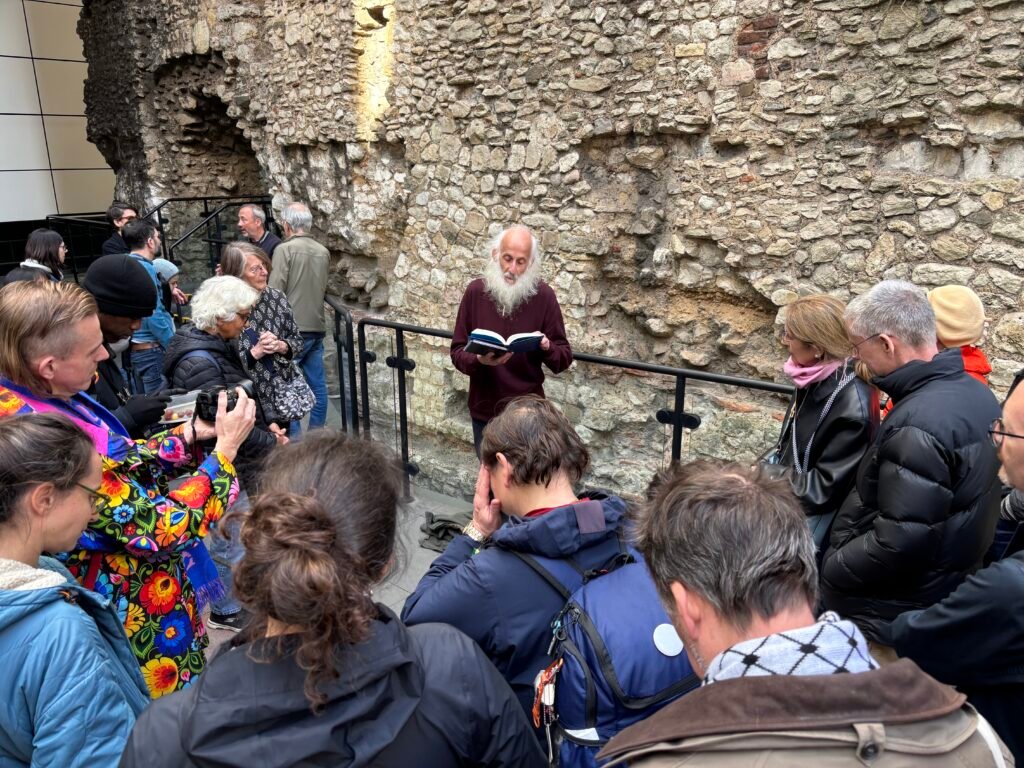
The Roman Wall at Tower Hill
Standing beside the remains of London’s Roman defences, we considered the city that Olaf might have encountered a thousand years ago. These ancient walls were already centuries old in his lifetime, a reminder that London’s history is made up of successive generations building upon what came before.
All Hallows by the Tower
One of London’s oldest churches, traditionally founded in 675, All Hallows contains a remarkable surviving Anglo-Saxon doorway, dating from approximately Olaf’s lifetime. It offered us a rare opportunity to encounter something of the physical world of eleventh-century London.
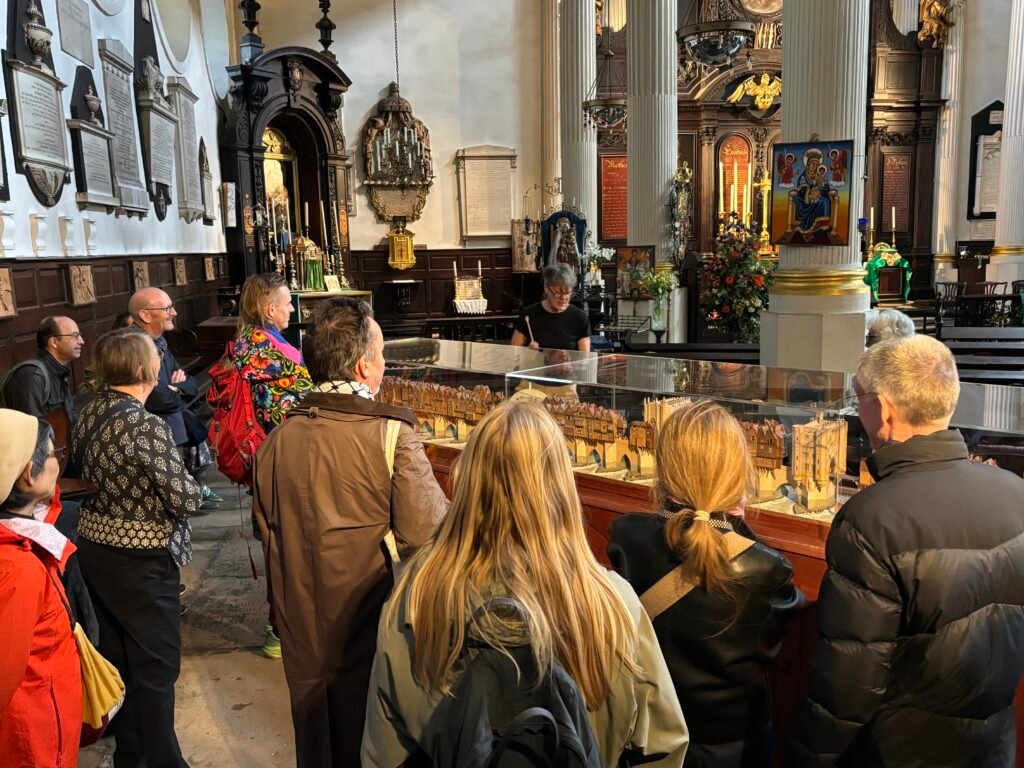
St Magnus the Martyr and London Bridge
Here we discovered connections with another saint of the northern world, Magnus of Orkney, whose story offers an intriguing contrast with that of Olaf. Beside London Bridge we also explored the famous saga traditions associating Olaf with an attack on the medieval bridge, where history, legend and poetry have become inseparably entwined.
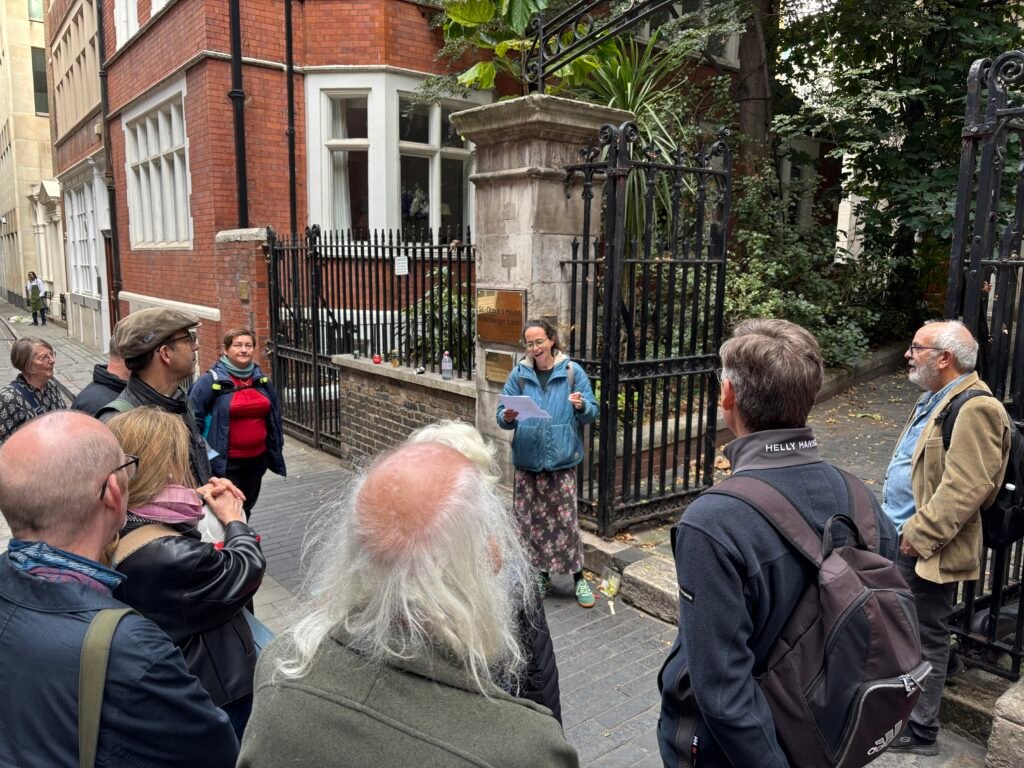
St Olave Old Jewry
Our next stop brought us to another of the City’s churches dedicated to the Norwegian saint. Although most of the building has disappeared, its tower survives, and its former clock now adorns St Olave Hart Street. An unexpected connection between two churches whose histories continue to overlap.
St Olave Silver Street
At the site of another lost church dedicated to Olaf, we discovered some fascinating connections with William Shakespeare, who lived nearby for a time. We also encountered evidence of a much earlier tradition of bringing Olaf’s story to life through dramatic performance in Tudor London, making this a particularly appropriate stop on our poetry pilgrimage.
St Paul’s Cathedral Churchyard
Our journey concluded at St Paul’s, a site with roots in Anglo-Saxon London and connections with the turbulent political world in which Olaf lived. Here, surrounded by the layers of London’s history, we reflected on how the stories of kings, saints and ordinary people continue to be remembered and reinterpreted long after the buildings and circumstances of their lives have changed.
Throughout the afternoon, poetry offered us fresh ways of responding to these places, bringing together history, faith, imagination and the experience of walking through the City.
A huge thank you to our wonderful participating poets:
Special thanks to all the wonderful poets who participated:
Gareth Evans at St Olave Hart Street,
Stephen Watts at the Roman Wall at Tower Hill,
Jules Sprake at London Bridge and St Magnus the Martyr
Lavinia Singer at St Olave Old Jewry and
SJ Fowler at St Paul’s Churchyard.
We are especially grateful to Sean, the verger at All Hallows by the Tower, and Nick, the verger at St Magnus the Martyr, for welcoming our group and opening their churches to us.
And thank you to Ian and Debbie for helping as marshals, ensuring that everyone found their way safely through the busy streets of the City.
It was a wonderful opportunity to rediscover some of London’s hidden history, to reflect on the enduring legacy of St Olaf, and to experience how ancient places can continue to inspire new words and fresh perspectives.